 English

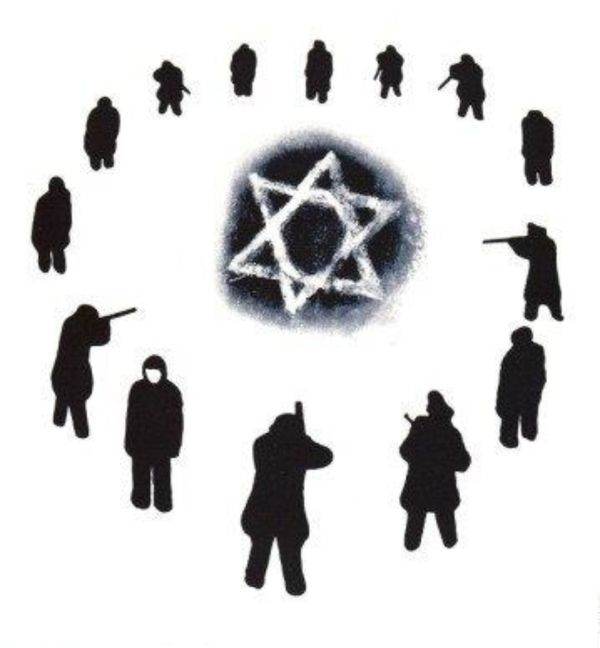
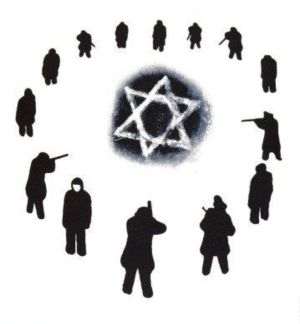
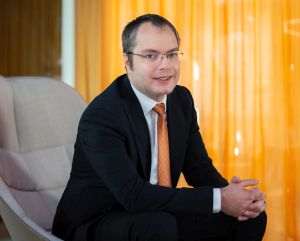
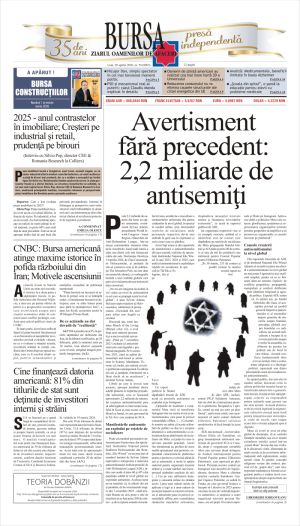
More than 2.2 billion people in the world hold anti-Semitic views, warns Sylvan Adams, president of the World Jewish Congress - Israel Region, citing data from the Anti-Defamation League, in a devastating message sent from Auschwitz, the place where history reached one of its darkest peaks. The statement, made on April 14, 2026, Holocaust Remembrance Day, and taken over by the website ynetnews.com and by the publication The Jerusalem Post, is not just an alarm signal, but a brutal x-ray of a global reality that seems to be dangerously returning to familiar trajectories.
"I never imagined I would see a level of anti-Semitism like the one that is now spreading globally,” said Sylvan Adams, the son of Holocaust survivors, emphasizing that the promise of "Never Again” seems more fragile today than ever.
His speech, delivered before the March of the Living, had the force of a personal testimony and a universal warning. "Until October 7, 2023, I thought anti-Semitism was more of a marginal issue. On October 8, 2023, when anti-Israel and anti-Semitic demonstrations appeared in Sydney, Manhattan, Toronto and London, I realized that it is a contemporary problem. In the last two and a half years, the phenomenon has only accelerated,” said Sylvan Adams.
The figures he cites are shocking: almost half of the adults on the planet share anti-Semitic prejudices, which means about 2.2 billion people. And the increase in anti-Semitism seems to be linked to Israel's intervention in Gaza and, more recently, to the conflict with Iran, in which the Tel Aviv government is supported by the US.
• Anti-Semitic manifestations have exploded on social networks
The number of anti-Semitic people may seem very high, but specialists from the National Institute for the Study of the Holocaust in Romania "Elie Wiesel" have told us that the number submitted by Sylvan Adams represents an interpretation of the anti-Semitism index periodically compiled by the Anti-Defamation League (ADL), an index that shows that between 40 and 45% of the adult population globally has anti-Semitic expressions. The same sources have told us that, in the last two and a half years, since the tragic events of October 7, 2023 - when Hamas terrorists killed over a thousand Israelis and took over 200 hostages - and since Israel's armed response in Gaza, we have witnessed an exacerbation of anti-Semitic feelings on the part of citizens globally, especially in the online environment, through social networks, where the people concerned are becoming more free in their speech or expression and writing exactly what they think.
This fact is also evident from the monitoring reports on antisemitism in our country, carried out by specialists from the Elie Wiesel National Institute in 2023, 2024 and 2025, which show that antisemitism has exploded on social networks, especially on TikTok and Telegram, but also on Facebook.
A report published at the end of last week by the ADL shows that antisemitic posts have also exploded on Instagram.
"Meta's content moderation options risk turning Instagram into a hub for hate and anti-Semitism, endangering offline communities. (...) Our research has shown that these policy changes have led to a dramatic increase in anti-Semitism and extremism on Meta's social media platforms, at least among certain populations. Malicious actors have taken advantage of this more permissive operating environment, exploiting the platform's features to promote hateful and anti-Semitic rhetoric, solicit material support for foreign terrorist organizations, and sell merchandise that incorporates explicit hate symbols. (...) The hate that Instagram users consume online doesn't stop there. The lack of robust law enforcement and safeguards against extremist and anti-Semitic rhetoric endangers offline communities by strengthening the ranks of extremist movements, spreading foreign terrorist messaging, and funding extremist activities,” the ADL report states.
And the organization also comes with concrete examples, showing that it has identified dozens of accounts spreading Islamic State and Al-Qaeda propaganda on Meta's social networks and over 40 accounts with hundreds of thousands of followers that campaign for the Popular Front for the Liberation of Palestine.
"On March 30, 253 accounts and posts included in the analysis of this report were reported directly to Meta by the ADL, including the PFLP Solidarity Aotearoa account, in an effort to proactively engage with the platform. As of April 1, the account was no longer active on the platform,” the source said, noting that some accounts dedicated to the liberation of Palestine were asking followers to make donations for this purpose.
The ADL also notes: "Affiliates of the PFLP were identified Samidoun, a transnational anti-Zionist group sanctioned by the US and Canadian governments as a "fake charity that serves as an international fundraiser for the Popular Front for the Liberation of Palestine,” operates on the platform. The presence of these accounts on Instagram is particularly concerning, as Meta has previously removed Samidoun accounts. The France-based Urgence Palestine group, which the French government began dismantling in 2025 for "inciting violence against people” and supporting "a terrorist organization such as Hamas,” has at least 18 national accounts and affiliates on Instagram. The weak enforcement of Meta policies that prohibit the glorification, support, and representation of terrorist organizations allows groups to amplify and promote terrorist organizations and causes on the platform.”
• The causes of the rise of anti-Semitism globally
From the reports prepared by the ADL and the Elie Wiesel National Institute, we note that this accelerated rise of anti-Semitism globally can no longer be ignored or explained simplistically, because it feeds on an explosive mix of geopolitical conflicts, propaganda, manipulation, and deliberate confusions between religious identity and political agendas. ADL experts argue that, in recent years, amid the war in Gaza, accusations of possible genocide against the Palestinians, and major tensions generated by attacks on Iran, the global perception of Israel has become radicalized, and this radicalization has begun to dangerously spill over to Jews as a whole, regardless of their political position or where they live. This fundamental confusion between Jews and Zionists, between a religious community and a political ideology, is one of the main causes of the resurgence of anti-Semitism.
In the public space, but especially in the online environment, critical discourse against the policies of the state of Israel often turns into a toxic generalization, in which Jews are collectively perceived as responsible for the actions of a government or an army. This slide from legitimate criticism to collective stigmatization creates fertile ground for the revival of centuries-old stereotypes, which are now reappearing in a form adapted to the digital age. The idea that Jews have a global plan for domination, that they control world finances or that they seek to expand the current state into a "Greater Israel" is once again becoming visible in viral discourses, fueled by social networks and poorly regulated information ecosystems, the cited sources claim.
In parallel, religious concepts taken out of context, such as that of the "chosen people", are tendentiously reinterpreted and used as an argument to support conspiracy theories about superiority or hegemonic intentions. Instead of being understood in its theological and historical sense, this concept is instrumentalized to justify hostile narratives, which present the Jews as a unitary entity, with hidden and coordinated objectives on a global scale. This distortion of religious meaning directly contributes to the consolidation of a distorted and dangerous image.
Another major factor is the resuscitation of notorious historical forgeries, such as the so-called "Protocols of the Elders of Zion”, a document fabricated in Tsarist Russia at the beginning of the 20th century, but which continues to circulate today in various forms, being presented as "evidence” of global conspiracies. In the digital age, such materials are recycled, reinterpreted and distributed massively, reaching new audiences who are unaware of their false and manipulative context. Thus, a myth debunked countless times returns as a propaganda tool in an already tense climate.
Added to all this is the current geopolitical dynamic, in which the conflict in the Middle East is being used by various state and non-state actors to fuel resentment and mobilize the masses. In this context, anti-Semitism is becoming not only an expression of prejudice, but also a strategic tool, used to channel public anger and create cohesion around simplified and polarizing narratives. Social networks amplify this phenomenon, transforming marginal messages into global trends in just a few hours, the cited sources show.
What is more serious is the fact that this increase in anti-Semitism does not come from just one ideological direction, but from a dangerous convergence of currents: religious extremism, political radicalism and conspiracy theories that meet at a common point - the demonization of Jews. In this climate, the line between criticism and hatred is becoming increasingly thin, and the silence of the majority contributes to the normalization of extremist discourse.
Thus, contemporary anti-Semitism is no longer just a relic of the past, but a phenomenon adapted to new realities, fueled by current conflicts and modern tools of propagation. And the greatest danger is not just its scale, but the speed with which it spreads and its ability to reinvent itself. In an already tense world, where the boundaries between truth and manipulation are becoming increasingly blurred, this resurgence of hate is not just a symptom, but a warning that history, ignored or distorted, can return in unexpectedly familiar forms.
• TikTok - the most anti-Semitic network, according to Sylvan Adams
In front of some 7,000 participants, 50 Holocaust survivors and more than 130 senior leaders from international law enforcement agencies - FBI, Interpol, Europol - who were in Auschwitz last week, Sylvan Adams outlined a map of the spread of hate that can no longer be ignored. He explicitly indicated the actors and mechanisms: "Iran and its allies, the Muslim Brotherhood supported mainly by Qatar, but also the Chinese, through the control and manipulation of TikTok, a network that I consider the most virulent anti-Semitic platform of all social networks.”
In his view, contemporary anti-Semitism is no longer fueled by a single ideology, but by a dangerous convergence: Islamist extremism provides the ideological engine, the radical left offers language and legitimacy, and the far right contributes conspiracy theories and xenophobic traditions. His message became even more pressing when he described the subtle mechanisms through which hatred infiltrates society: "It did not start with gas chambers. It started with words, with permission and with silence.”
This is perhaps the harshest lesson of Auschwitz, brought back to the present in a global context in which, Adams says, most people are not anti-Semitic, but choose to remain silent out of fear or indifference. And this silence, he warns, is precisely the space where hatred takes root and grows.
At the same time, he has drawn attention to systemic vulnerabilities: synagogues in need of permanent protection, Jewish schools targeted, people forced to hide their identities in public spaces. "When we get to that point, something much deeper is wrong,” he said.
In a moment of maximum emotional tension, Adams summed up the current stakes in a phrase that reverberates beyond its historical context: "It may start with the Jews, but it never ends with the Jews.” It is a warning that anti-Semitism is not just a problem of one community, but a symptom of a broader societal breakdown. If allowed to grow, it undermines not just Jewish security but the very fabric of Western values.
And yet, despite the bleak picture, Adams does not give up hope. "If we fail, we risk creating the next generation of survivors,” he said, a statement that leaves no room for interpretation and that transforms the Auschwitz discourse into an urgent call for global responsibility.










 Euro
Euro Dolar SUA
 Franc elveţian
 Liră sterlină
 Gram de aur






















Reader's Opinion